
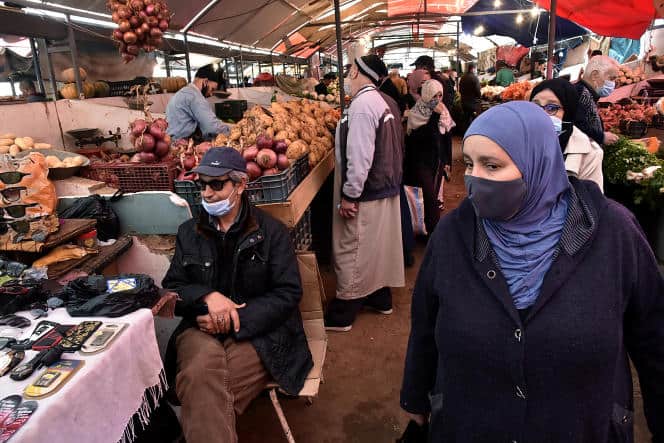
Water rationing, soaring food prices and the economic crisis linked to Covid-19: Algerians begin the month of fasting in difficult conditions.
“We have a president who talks to us about oil, meat and semolina” , laments Hafid. On his farm in eastern Algeria , this small breeder comments on statements made by Abdelmadjid Tebboune during an interview broadcast on April 4 by public television. While the month of Ramadan is due to start on Tuesday, April 13, the head of state assured that food products would be available. He also warned speculators, accused in recent weeks of having caused soaring prices of certain basic products, including oil.
Words that have not really reassured: the country has been experiencing a difficult socio-economic situation for several months and it is with apprehension that Algeria begin this month of fasting, synonymous with daily family reunions. “It is not at the time of Ramadan that I am going to restrict myself” , explains Hafid, citing the additional expenses for the various dishes – dates, fermented milk, dried fruits, cheese… – which will garnish the family table when the meal is broken. young. “Fortunately I have my sheep, so I won’t have to buy imported meat ,” adds the breeder.
Because after oil, it is the rise in meat prices that offended consumers and led to numerous calls to boycott this product. In an attempt to reduce tariffs, the authorities proceeded in early April to issue exceptional authorizations for the import of frozen red meat from Spain. And to fight against speculative practices, the government plans to deploy 20,000 control agents across the territory.
The rise in consumer prices, which is traditional at the time of Ramadan, can be explained by several factors. “The Covid-19 crisis has had repercussions on businesses, production and manufacturing networks. The devaluation of the dinar also weighed on the purchasing power of citizens, ” indicates Hadj Tahar Boulenouar, president of the National Association of Traders and Craftsmen. The loss of value of the Algerian currency in relation to the reference currencies that are the dollar and the euro pushes up the prices of imports in foreign currencies. A trend which has direct repercussions on consumer prices, while “more than 70%” of household needs “depend on imports”, explained in December the economist Smaïl Lalmas to the daily El Watan.